Management: The other side of the coin
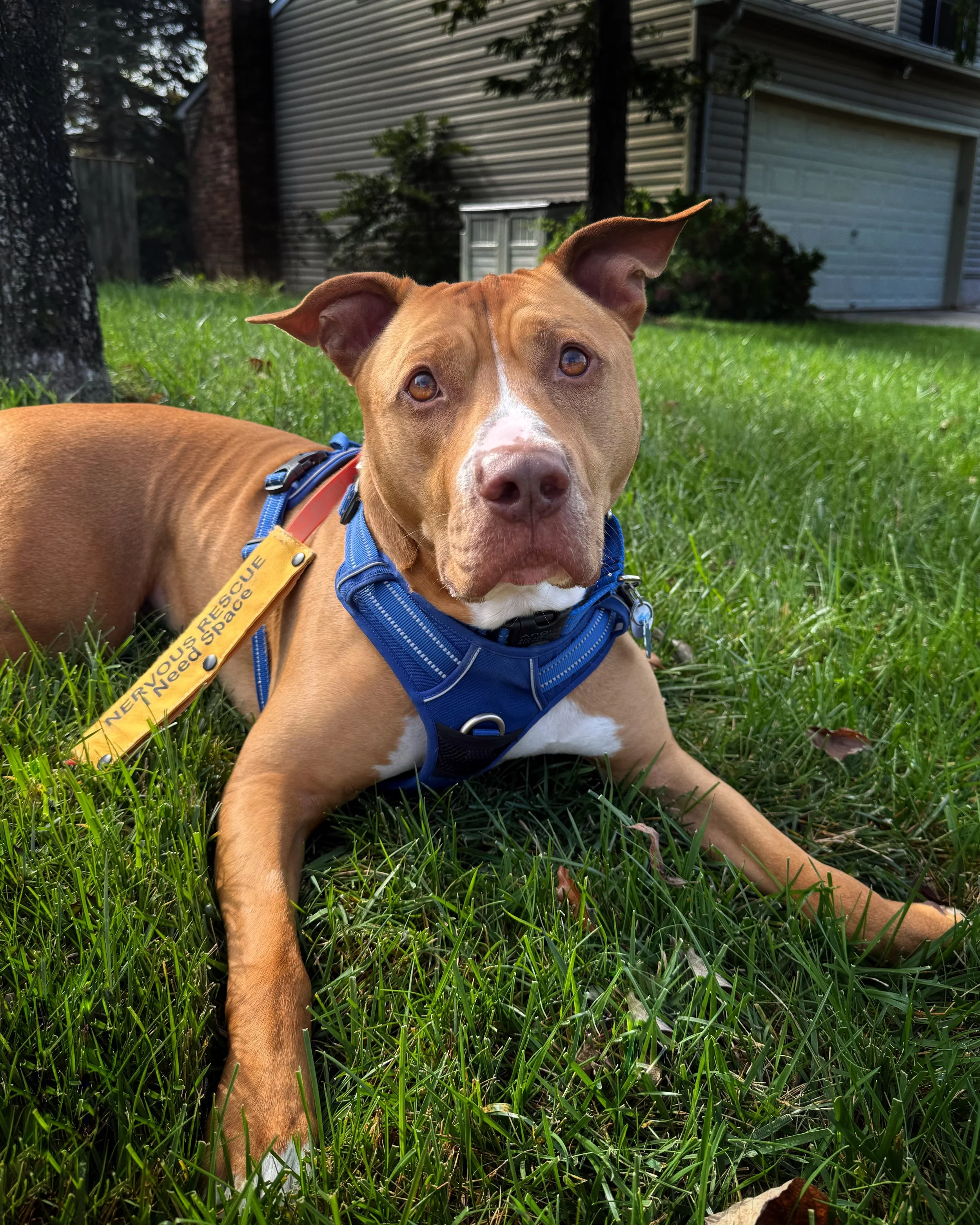
“Management” in the context of dog training refers to the ongoing ways that we prevent unwanted and/or unsafe behavior. Management is always a part of responsible dog ownership, but often folks need help identifying what exactly needs to be done and why. That’s where I come in.
Management in the context of training
Training and management are two sides of the same coin, and in order for training to be effective, you cannot skip management!
Training = our efforts to teach the behaviors we want (teach new skills and patterns, condition new emotional responses, etc).
Management = our efforts to prevent the behaviors we don’t want
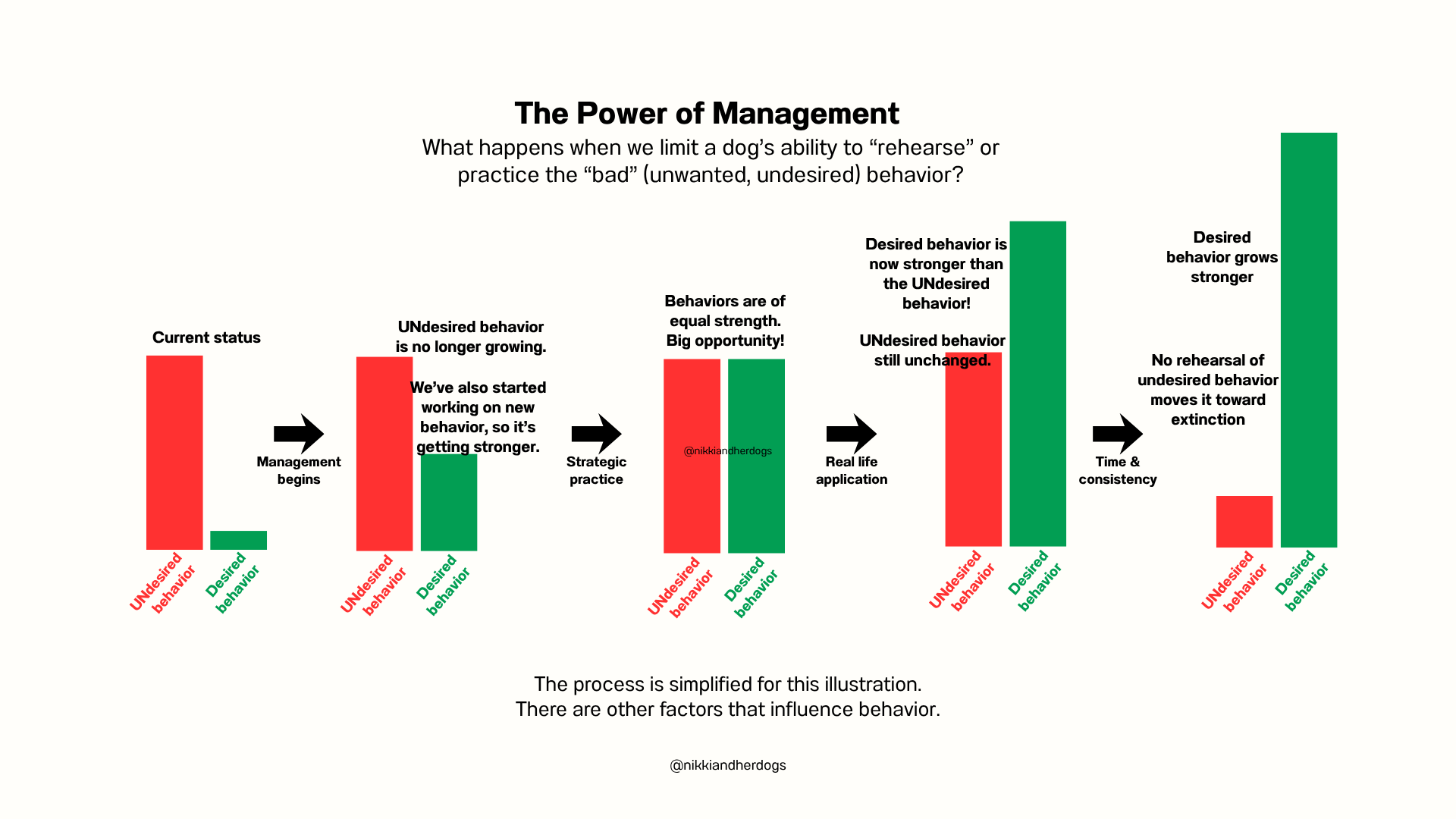
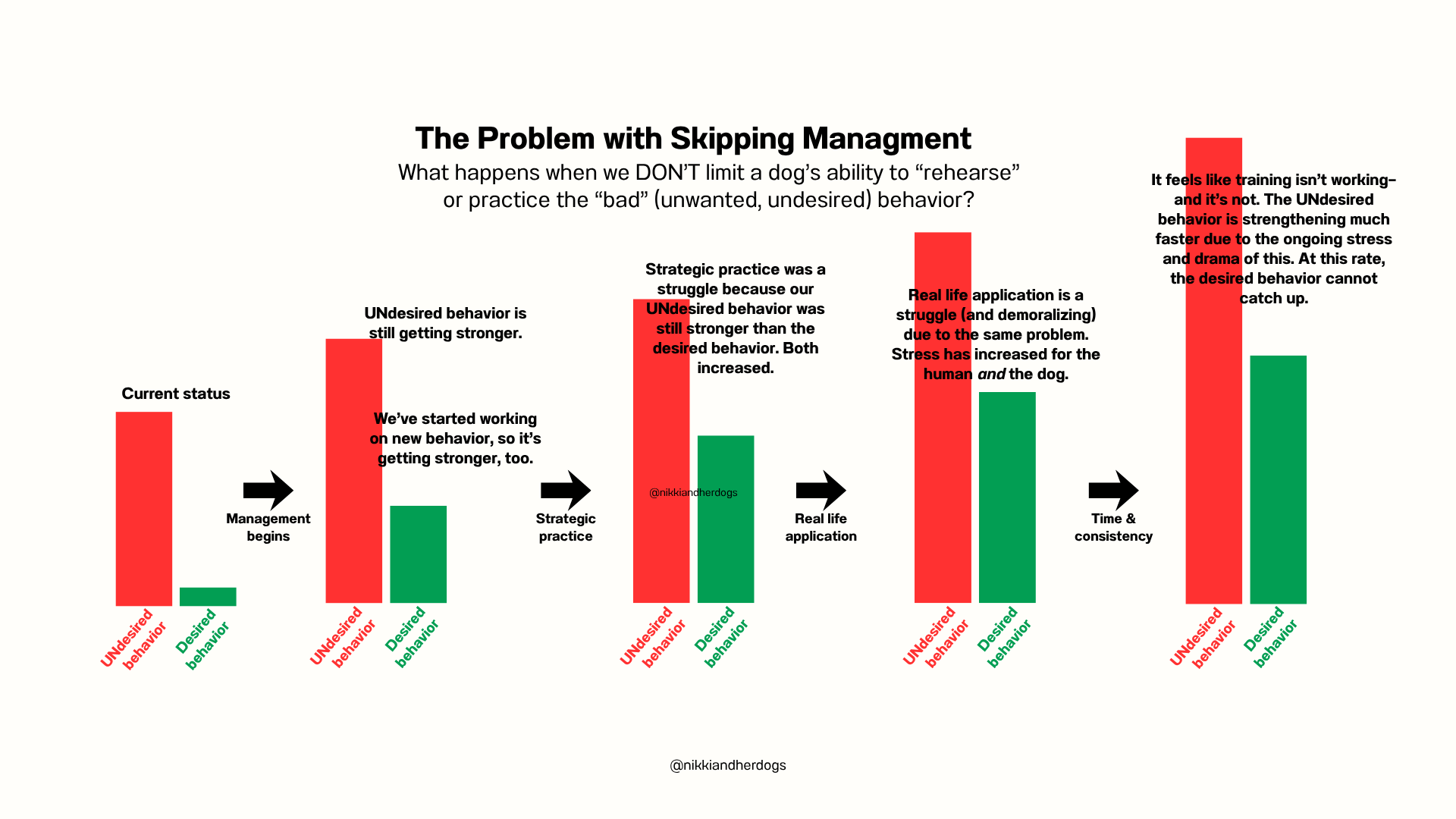
Think of it this way: At the onset of training, our dog has already been practicing the unwanted behavior, which means they already have some momentum behind it. Our training efforts will be building momentum behind a new behavior to replace the unwanted one. But if our dog is still building momentum behind the unwanted behavior, then our new behavior won’t ever catch up, and this problem will continue.
Here’s a visual illustration of what I mean:
And on the other hand, here’s an illustration of what happens when you skip management.
Now, let’s use a concrete example.
Let’s say your dog barks at activity outside from your front window, and your training goal is to teach your dog to calmly observe their environment instead. The first thing we’re going to do is implement management to prevent them from continuing to bark. This might look like closing the blinds or curtains, applying a temporary window film that blocks their view without blocking the light, adding a sound machine so that fewer sounds from outside draw their attention, blocking their access to the window they bark from, etc. One way or another, we have to stop the barking!
Then, we’ll begin our efforts to teach and pattern a different behavior at or near the window, and a different response to seeing or hearing activity outside. We’re building momentum behind these new behaviors and responses, and while we’re doing that, our management efforts are preventing any further momentum behind the unwanted behavior (the barking). The final step is to reintroduce the dog’s view from the front window in manageable increments and work up to full access again. At that point, management is no longer necessary on a regular basis.
This is a very condensed overview of the training process! Of course there are many nuances and steps that this summary doesn’t include, but I hope this example better illustrates the relationship between management and training.
Long-term management
Some management efforts should be continued long term—maybe not forever, but possibly. These are usually safety-related efforts. For example, small children and dogs should never be alone unsupervised. Most trainers who specialize in dog-kid relationships recommend supervision until the child is 8 years old. For those first 8 years, your supervision is management because you are preventing unwanted/unsafe behavior from being practiced.
Another example: If you’ve ever visited someone’s home and they explain that their dog doesn’t like guests so he’s staying outside, in another room, in his crate, etc., then you’ve witnessed management in action. They’re preventing unwanted and/or unsafe behavior by separating the dog from their guests. This is a behavior they could work on through training, and maybe they will, or maybe they’re content to just manage the behavior. Some folks opt to manage behaviors for the life of the dog, and sometimes the long-term solution includes a combination of management and training.
If you’re working towards changing your dog’s behavior, you can determine what needs management by asking yourself what behavior you’d like to get rid of. Then, figure out what you need to do in order to prevent your dog from practicing that behavior while you’re working on your training.