
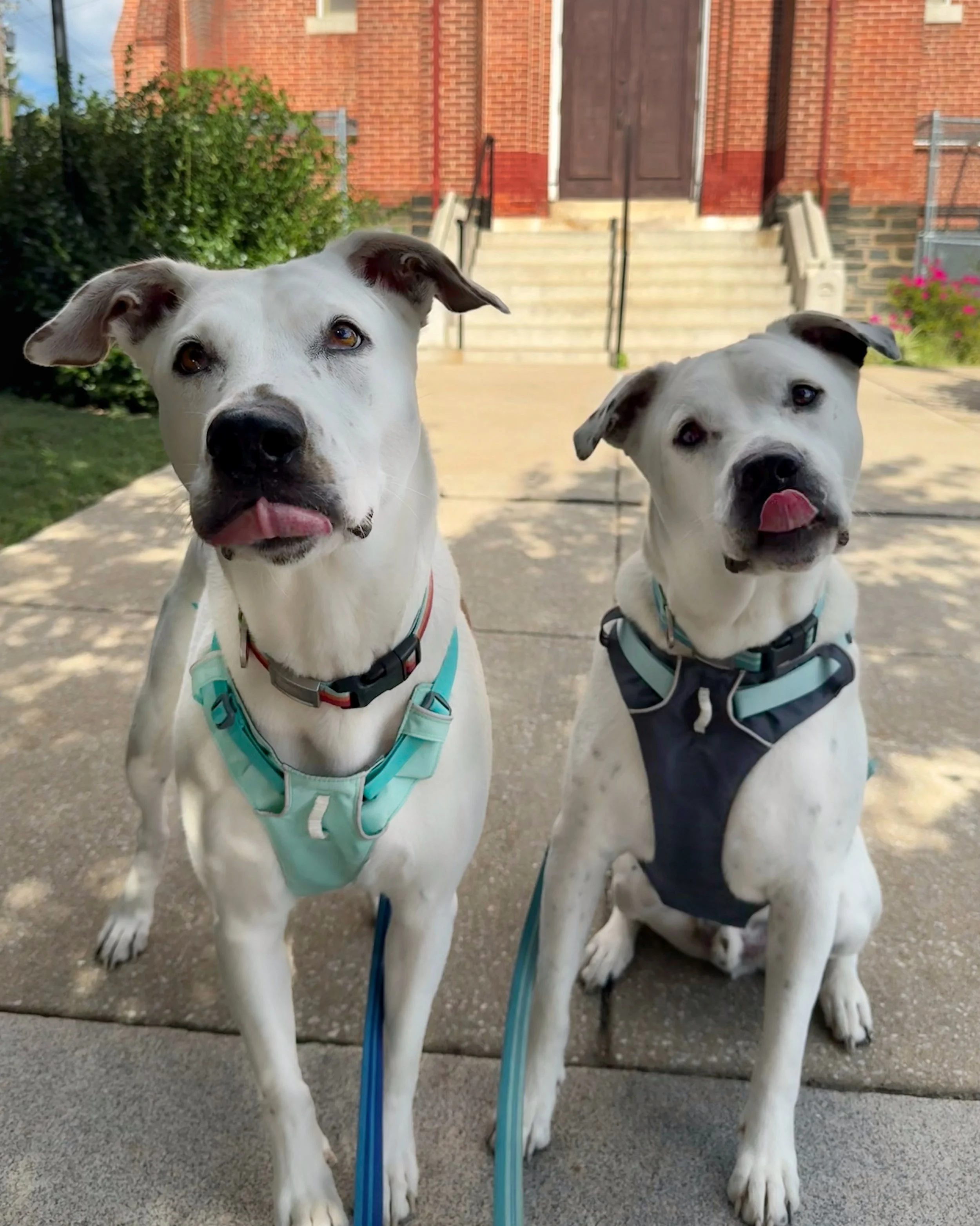
Using Food in Dog Training
Why we do it, what you’ll need, food-related FAQs, and more.
✳︎
Positive reinforcement works for every being.
✳︎
✳︎ Positive reinforcement works for every being. ✳︎
Is it really okay to use food to train dogs?
Will all that food spoil them? Does it hinder our relationship? Will we have to rely on it? These are all common concerns of dog parents who prepare to embark on their dog training journey, and I understand why, but we’re thinking about food all wrong. Consider this…
Thousands of years ago, long before our modern dogs existed, their ancestors started hanging around humans. They were hanging around for food, and they kept coming back for food.
Food is the reason we have dogs.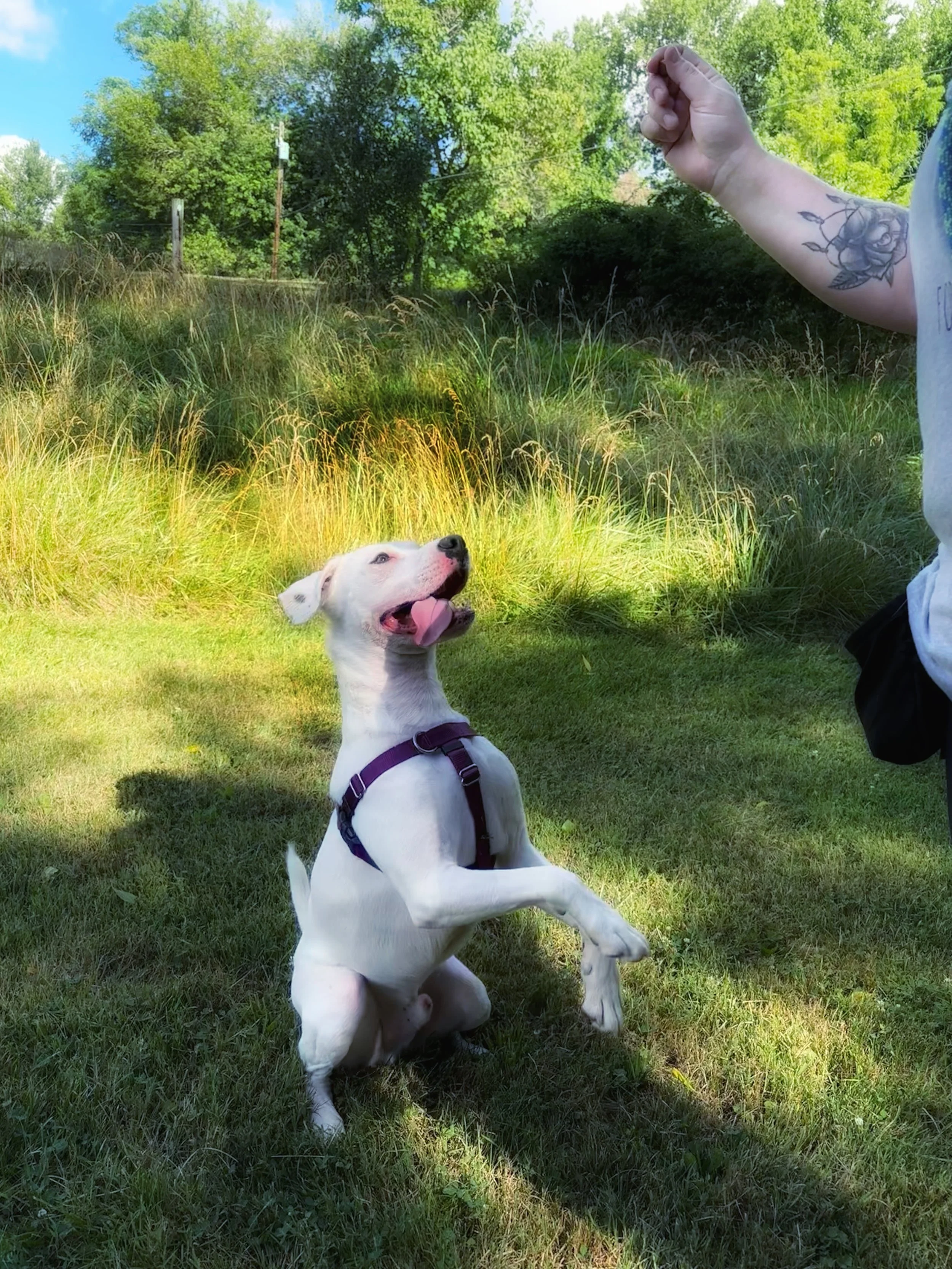
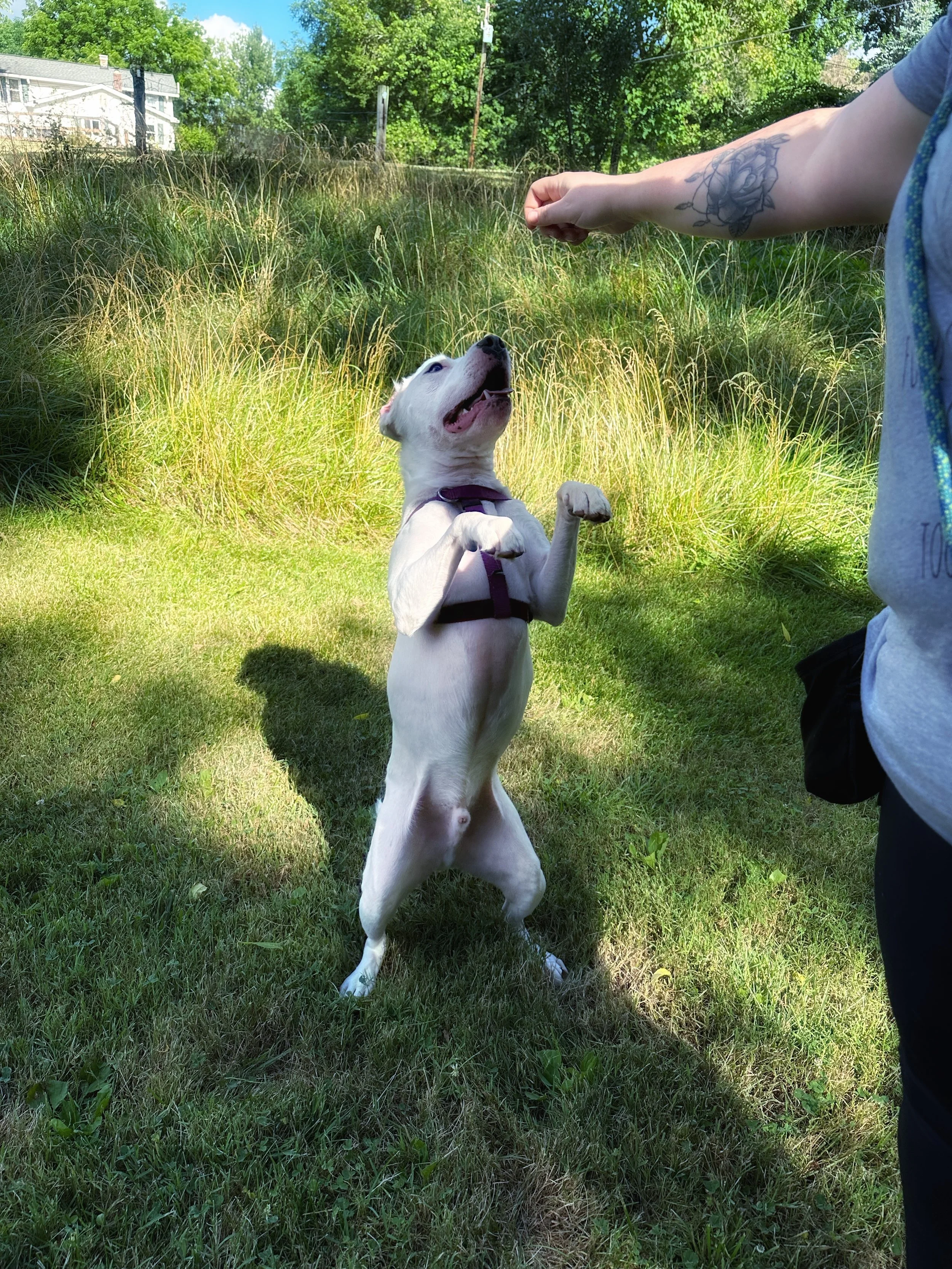
It's always been a key part of our relationship.The domestication of dogs didn’t happen because we established ourselves as their “leader” or they “respected” us; it happened because we fed them.
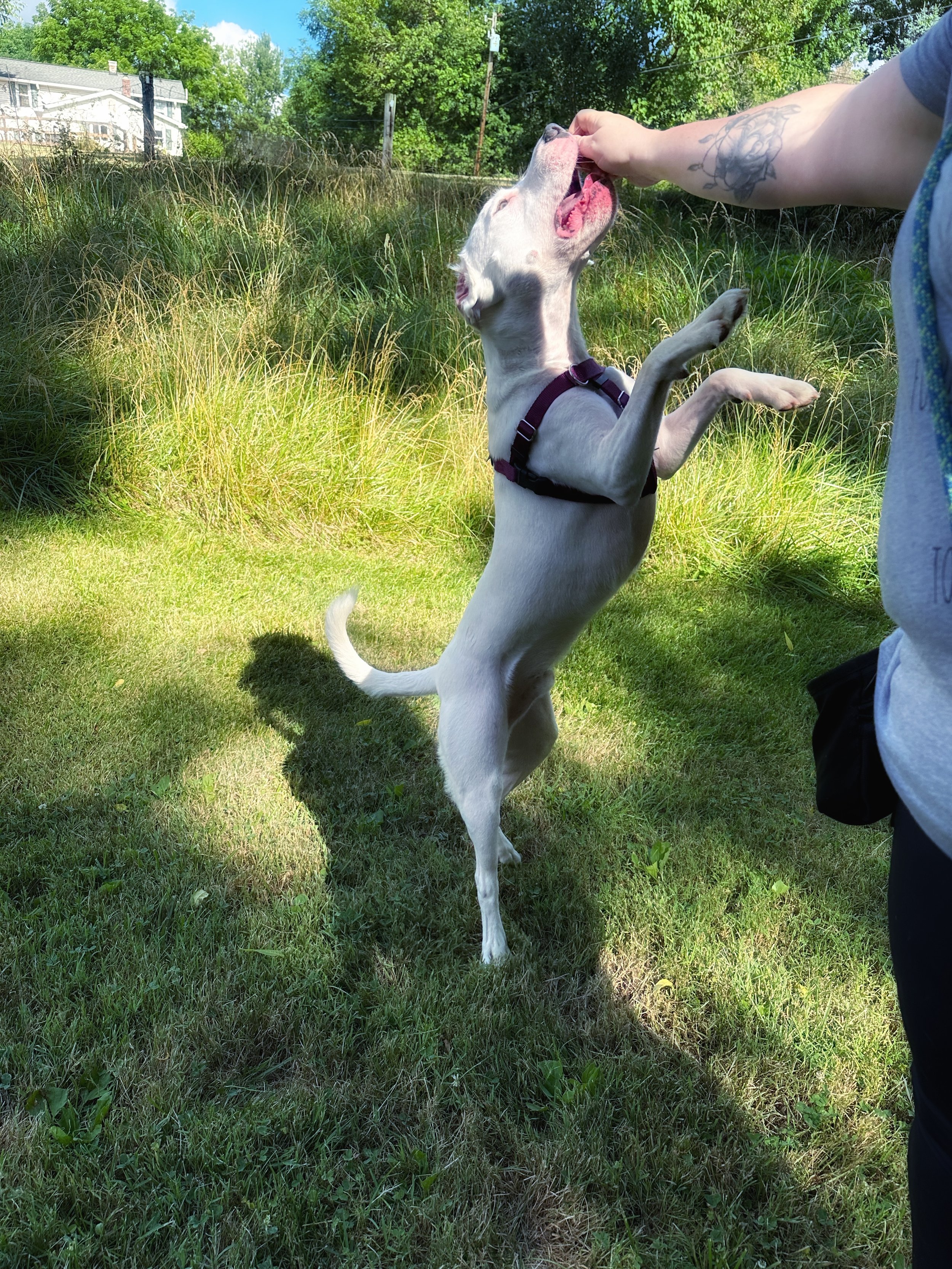
Using food to connect with dogs is an ancient practice.We’ve always understood that food is a central part of our connection to dogs, and a key motivator for their cooperation. This hasn’t changed; if anything, it’s more true than ever.
Ideas for Food Rewards
You will need far more food than you think. I recommend preparing 300 small pieces of food per dog for each lesson. For our first lesson, I recommend preparing 50% low-value, 35% medium, and 15% high. All medium, high and highest value treats should be chopped up into small pieces; otherwise, you’re going to fly through your food stash!
-
Regular kibble - Kibble generally works well for routine training inside. Once you’re working outside and/or with distractions and triggers, you’ll need something of a higher value.
Plain Cheerios - The only downside to these is they don’t fly well and we will be tossing food a lot. But in the beginning, these could be perfect.
-
Apple slices chopped into little pieces are a great whole food option.
Any typical package of treat you’d buy at a pet store or online is generally going to fall into this category. These are always good to have on hand.
These are almost always sold in pieces that are way too big for training, so be sure to CUT THEM UP. This is worth the time and effort. It’ll save you money and save your dog calories.
-
Freeze-dried anything is a high value treat for most dogs. Beef liver, salmon, and chicken are popular.
Costco usually has great deals on freeze dried beef liver, and sometimes they have salmon, too.
Cheese (cheese sticks or a block of cheese cut into small pieces) is also considered high value for most dogs.
Cut all freeze-dried food and cheese into SMALL pieces; otherwise, your dog will be flying through your stash.
-
Typically, most dogs consider actual meat to be VERY high value!
Cooked chicken, rotisserie chicken, hot dogs, Vienna sausages, etc.
Hopefully this goes without saying, but I’ll say it anyway: please remove any parts that are unsafe for your dog to ingest.
CUT IT INTO SMALL CUBES! If you don’t you’re going to have a mess on your hands.
Preserve these rewards for the most difficult of situations.
!!IMPORTANT!!
We are NOT making your dog “earn” their meals!
We do not want to require a dog to participate in training activities with us in order to have their basic needs met. Basic needs should always be met without contingencies. This builds trust and safety.
It is okay to use some of your dog’s daily kibble as food rewards, but be sure to feed them the larger portion of their meal first and without making them “earn” it in any way.
It is also okay to give your dog’s meals as enrichment activities. There’s a big difference between a puzzle bowl and a training requirement!
Food FAQs
Which foods are best?
Ultimately, it takes trial and error to see which foods your dog prefers, digests well, and considers low, medium, high and highest value.
What about calories?
If you’re worried about your dog gaining weight, shave a little kibble off of each meal on days when they get a lot of food during training activities.
Why so many?!
Please, please take the time to chop your dog’s food rewards into smaller pieces (except kibble and cheerios). Commercial treats are unnecessarily big. The size of your fingernail is just fine.